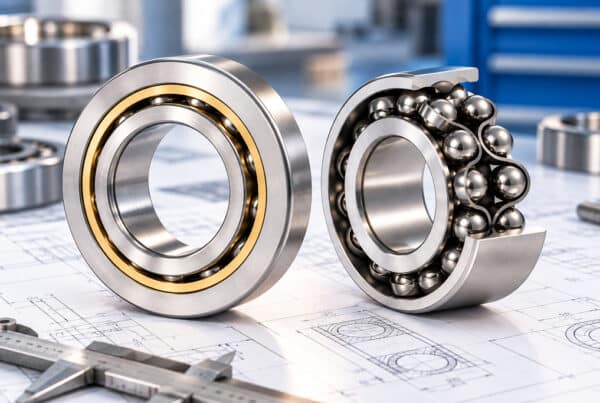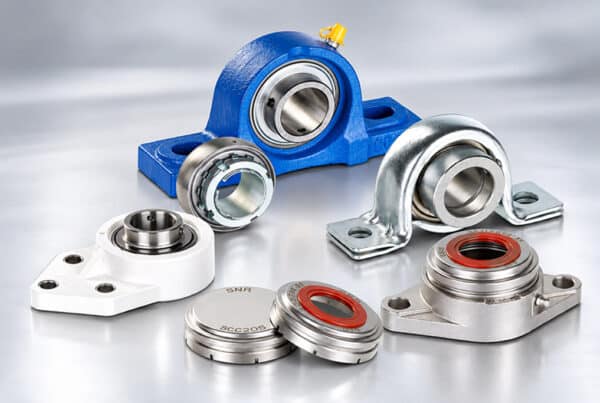
Bearings are essential components in virtually every rotating or moving machine element. Their primary function is to reduce friction, support operational loads, and ensure the reliable, long-term performance of machinery.
While rolling bearings are used in most industrial applications, there are many situations where a plain bearing, plain bushing, or spherical plain bearing provides a more suitable engineering solution.
This raises an important question:
When should you choose a rolling bearing, and when is a plain bearing the better option?
The answer is simple: there is no universal bearing suitable for every application. The right choice always depends on the specific operating conditions.
What Is the Difference Between a Rolling Bearing and a Plain Bearing?
The operating principles of these two bearing types are fundamentally different.
Rolling bearings reduce friction between moving components by using balls or rollers as rolling elements. This enables high rotational speeds, precise shaft guidance, and low rolling resistance.
Plain bearings and plain bushings do not contain rolling elements. Instead, the shaft slides directly against the bearing or bushing surface, where the appropriate material combination—and, depending on the application, lubrication—ensures reliable operation and a long service life.
Spherical plain bearings are specialized plain bearing solutions. In addition to accommodating rotational movement, they can compensate for shaft misalignment, making them widely used in agricultural machinery, construction equipment, and industrial machines with articulated joints.
When Should You Choose a Rolling Bearing?
In general, rolling bearings are the preferred choice when the application requires:
✔ Low rolling resistance
✔ High rotational speeds
✔ Precise shaft guidance
✔ Long and reliable service life
✔ Easy replacement and maintenance
Typical applications include:
- Electric motors
- Industrial fans
- Pumps
- Gearboxes
- Conveyor systems
- Automated manufacturing equipment
When Is a Plain Bearing or Plain Bushing the Better Choice?
In certain applications, plain bearings, plain bushings, or spherical plain bearings can provide a more suitable engineering solution than rolling bearings.
They are particularly advantageous when:
✔ High shock or alternating loads occur
✔ Oscillating or pivoting motion is required
✔ High surface loads are present
✔ Installation space is limited
✔ Good vibration damping is important
✔ A simple and robust design is required
Typical applications include:
- Agricultural machinery
- Earthmoving equipment
- Construction machinery
- Hydraulic cylinders
- Lifting equipment
- Articulated joints in industrial machinery
Choosing the Right Bearing Involves More Than Just the Bearing Type
Selecting the right bearing is never determined by a single factor.
Key considerations include:
- Load magnitude and direction
- Operating speed
- Type of motion
- Operating temperature
- Environmental contaminants
- Lubrication conditions
- Available installation space
- Required service life
- Maintenance requirements
Evaluating these factors together helps identify the bearing solution that best matches the requirements of the application.
| Feature | Rolling Bearing | Plain Bearing / Plain Bushing |
|---|---|---|
| Operating principle | Balls or rollers provide rolling motion | Motion occurs between sliding surfaces |
| Friction | Generally low | Depends on the application, material pairing, and lubrication |
| Operating speed | Suitable for high rotational speeds | Typically preferred for low to moderate speeds |
| Vibration damping | Limited | Generally better |
| Installation space | May require more installation space | Compact designs are possible |
| Typical applications | Electric motors, fans, pumps, gearboxes | Articulated joints, hydraulic connections, construction and agricultural machinery |
Choosing the Right Bearing Is Easier with Expert Support
Whether you are selecting a rolling bearing, plain bearing, plain bushing, or rod end, choosing the right product can have a significant impact on equipment reliability, service life, and maintenance requirements.
Bearing Kft. offers a comprehensive range of bearing solutions, including rolling bearings, plain bearings, plain bushings, spherical plain bearings, as well as male and female rod ends.
If you have any questions about selecting the right bearing solution for your application, don’t hesitate to contact the experts at Bearing Kft..
Frequently Asked Questions
What is the main difference between a rolling bearing and a plain bearing?
A rolling bearing reduces friction by using balls or rollers as rolling elements, while a plain bearing operates with sliding surfaces in direct contact. The most suitable solution always depends on the application’s operating conditions.
When should you choose a rolling bearing?
Rolling bearings are generally recommended for applications that require high rotational speeds, low friction, and precise shaft guidance, such as electric motors, pumps, industrial fans, and gearboxes.
When is a plain bearing or plain bushing the better choice?
Plain bearings and plain bushings can be the preferred solution in applications involving high shock or alternating loads, oscillating or pivoting motion, limited installation space, or where good vibration damping is required.
What are rod ends used for?
Rod ends are designed for applications that require both rotational movement and compensation for shaft misalignment. They are commonly used in agricultural machinery, construction equipment, hydraulic cylinders, and industrial articulated joints.
Is there a universal bearing suitable for every application?
No. Selecting the right bearing always requires evaluating factors such as load, operating speed, type of motion, lubrication conditions, environmental influences, and available installation space.
How do you choose the right bearing for a specific application?
The best bearing solution depends on the application’s technical requirements, including load, speed, operating environment, lubrication, and maintenance needs. If you’re unsure which product is best suited for your application, consulting a bearing specialist is recommended.