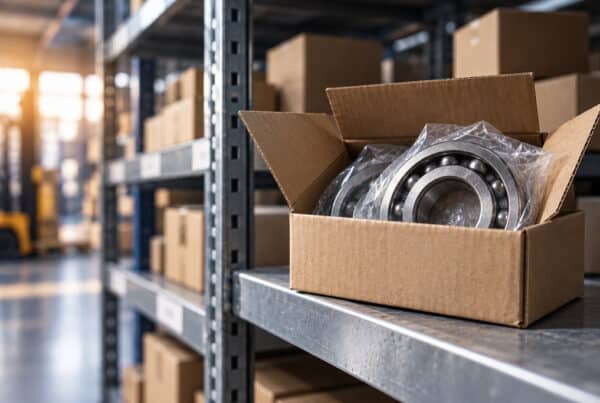
Bearing failures are one of the leading causes of unplanned downtime in industrial operations. This is especially true in applications where equipment operates continuously under high-temperature conditions.
Steel mill furnaces, ceramic kilns, heat treatment systems, industrial dryers, and even certain food processing machines expose bearings to constant thermal stress. In these environments, many companies face the same recurring issue: bearings fail repeatedly, even though neither the load nor the operating speed has changed.
In most cases, however, the bearing itself is not the root cause. The real problem is that the selected bearing solution was never designed for such extreme operating conditions.
Why Is High Temperature a Problem for Bearings?
High temperatures reduce bearing service life in several ways, often leading to premature failures and unexpected downtime.
Lubricant Degrades More Quickly
At elevated temperatures, lubricants lose their viscosity and lubricating properties more rapidly. As a result, friction between the rolling elements and raceways increases, accelerating wear and generating even more heat.
Thermal Expansion Changes Bearing Performance
Bearing components expand as the temperature rises. If the internal clearance is not properly selected, thermal expansion can significantly increase the internal load on the bearing, resulting in higher friction, increased operating temperatures, and reduced service life.
Contamination Accelerates Wear
In industries such as steel production, cement manufacturing, and ceramics, bearings are frequently exposed to metal dust, soot, and other abrasive contaminants. Once these particles enter the bearing, they can rapidly damage the raceways and rolling elements, dramatically shortening bearing life.
The process often becomes self-reinforcing: higher temperatures lead to increased wear, and increased wear generates even more heat, creating a cycle that eventually results in premature bearing failure.
The Most Expensive Bearing Failure Isn’t the Cost of the Bearing
Many industrial plants still focus primarily on the purchase price of a bearing, while the real cost lies in the unplanned downtime caused by its failure.
A prematurely failed bearing can result in:
- Production downtime
- Emergency repairs
- Overtime labor costs
- Scrap and product waste
- Delayed deliveries
- Reduced equipment availability
For this reason, the goal of modern maintenance is no longer to purchase the least expensive bearing, but to select the solution that delivers the longest possible service life and the highest level of operational reliability.
The Real Difference Becomes Clear at High Temperatures
Under normal operating conditions, it is often difficult to notice a significant difference between two premium-quality bearings.
However, under extreme thermal stress, several design factors become critical, including:
- Heat treatment
- Internal clearance
- Surface treatment
- Lubrication technology
- The overall bearing design
At 300°C, the Difference Is Clear
In a long-term endurance test conducted at 300°C (572°F), the NTN-SNR F604 high-temperature bearing achieved nearly 200 additional operating hours compared to a premium competitor’s bearing in the same category.
This difference can have a major impact in applications where an unexpected bearing failure may result in hours—or even entire shifts—of unplanned production downtime.
For high-temperature industrial applications, selecting the right bearing is not just about extending bearing life; it’s about improving equipment reliability, reducing maintenance interventions, and lowering the total cost of ownership (TCO).

The NTN-SNR F604 bearing was specifically developed for continuous or cyclic operation at temperatures ranging from 200°C to 350°C (392°F to 662°F). Its design incorporates a significantly increased C5 internal clearance, a specialized surface treatment, and a high-temperature lubrication system. Together, these features compensate for thermal expansion, reduce wear under extreme conditions, and ensure reliable operation in high-temperature applications.
Not All High-Temperature Bearings Are the Same
High-temperature applications require bearings specifically engineered to withstand extreme operating conditions.
These bearings typically feature:
✔ Specialized heat treatment for improved thermal stability
✔ Increased internal clearance to compensate for thermal expansion
✔ High-temperature lubrication systems designed for elevated operating temperatures
✔ The ability to accommodate significant thermal expansion while maintaining reliable performance
When selecting the right bearing for a high-temperature application, operating temperature is only one factor to consider. Rotational speed, load, contamination levels, and lubrication conditions must also be carefully evaluated to ensure maximum service life and reliable operation.
When Should You Reevaluate Your Current Bearing Solution?
If you regularly experience any of the following issues, it’s worth having your application evaluated by a bearing specialist:
- Recurring bearing failures
- Shorter-than-expected bearing service life
- Excessive re-lubrication requirements
- Persistently high operating temperatures
- Repeated downtime on the same machine
In many cases, simply replacing the failed bearing is not the real solution. The key is selecting a bearing that is specifically engineered for the application’s operating conditions. The right bearing can significantly improve reliability, extend service life, and reduce both maintenance costs and unplanned downtime.
You Can’t Negotiate with Heat—But You Can Prepare for It
In high-temperature applications, the difference between bearing technologies inevitably becomes apparent over time.
Choosing the right bearing solution isn’t just about extending bearing life. It also means greater equipment reliability, fewer unplanned shutdowns, lower maintenance costs, and more predictable production performance.
At Bearing Kft., our bearing specialists help customers identify the most suitable solution for even the most demanding high-temperature industrial applications.
👉 Contact us today, and let’s find the right bearing solution for your application together.
FAQ About High-Temperature Bearings
Why do bearings fail more frequently at high temperatures?
High temperatures accelerate lubricant degradation, increase the effects of thermal expansion, and speed up wear. As lubrication performance declines, friction and operating temperatures rise, creating a cycle that can lead to premature bearing failure.
What type of bearing can operate at 300–350°C?
Applications operating at 300–350°C require bearings specifically engineered for high-temperature service. These bearings typically feature specialized heat treatment, increased internal clearance, and high-temperature lubrication systems designed to withstand extreme thermal conditions.
Is replacing the bearing more frequently a sufficient solution?
In most cases, no. If the root cause—such as excessive temperature, improper lubrication, or incorrect bearing selection—is not addressed, the replacement bearing is likely to fail prematurely as well.
What is the difference between a standard bearing and a high-temperature bearing?
High-temperature bearings are designed with specialized materials, heat treatment, increased internal clearance, and lubrication systems that maintain reliable performance under extreme temperatures. Standard bearings are generally not intended for continuous operation in such environments.
Why is it important to measure the actual operating temperature of a bearing?
The bearing’s operating temperature can be significantly higher than the surrounding ambient temperature. Measuring the actual operating temperature helps engineers select the correct bearing design and lubrication solution, preventing premature failures.
Which industries commonly experience high-temperature bearing problems?
High-temperature bearing applications are common in steel mills, cement plants, ceramic manufacturing, glass production, heat treatment facilities, industrial dryers, and certain food processing operations where bearings are continuously exposed to elevated temperatures.
How can Bearing Kft. help?
Bearing Kft. provides expert technical support, application analysis, and bearing selection services for demanding industrial environments. Our specialists help identify the most reliable bearing solution based on operating temperature, load, speed, contamination levels, and lubrication conditions.