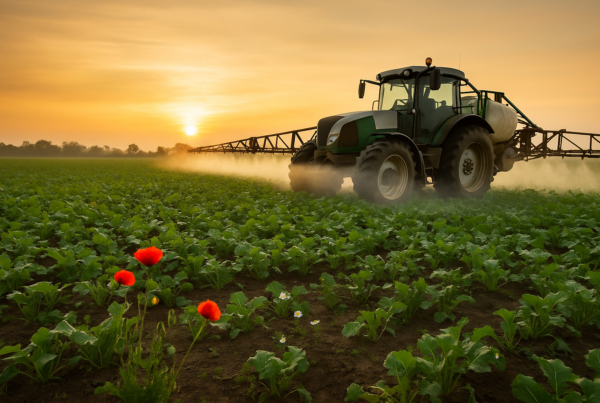
Most bearings perform flawlessly until the agricultural environment truly puts an entire machine series to the test.
Why is bearing-related risk different in OEM agricultural machinery manufacturing?
The operating environment of agricultural machinery is not controlled. Dust, mud, moisture, shock, and vibration are present in every production series. This is the baseline condition.
From an OEM standpoint, a bearing must behave consistently from unit to unit. Functionality alone is not enough.
The goal is predictable, low-complaint performance.
The real risk for OEM buyers: lack of consistency
In proven designs, the greatest risk is series-level variation. The same bearing may perform flawlessly in one machine, become noisy early in another, and wear faster in a third.
This does not necessarily indicate a defective bearing. More often, it shows that the selected solution is more sensitive to real operating conditions than the design allows. For OEM procurement, the primary objective is therefore reducing variation across serial production.
The OEM logic behind the NTN agricultural bearing portfolio
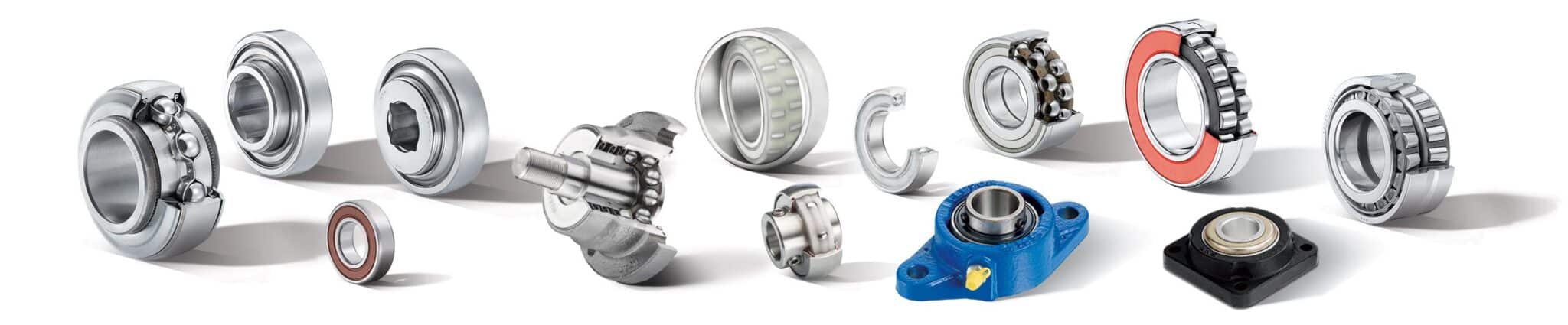
The NTN agricultural bearing range is not built around a single universal solution. It follows an application-based system logic designed to address typical risk factors in OEM agricultural machinery manufacturing.
Contaminated environments as a baseline condition
For tillage, harvesting, and seeding equipment, contamination is a constant load. NTN L3, L4, and AGR sealing systems are designed with this reality in mind. The objective is not laboratory performance, but operational stability.
From an OEM perspective, the key value lies in reducing series-level variation, which directly impacts the number and type of customer complaints.
Assembly and installation stability in serial production
Repeatability in assembly is a fundamental requirement in serial manufacturing. Pre-assembled AGRIHUB units reduce installation and assembly variation. This is not a maintenance benefit, but a quality-stability factor.
In our previous article, we wrote about the new generation Agrihub SNR bearing unit >> AGRIHUB SNR – The next-generation maintenance-free bearing unit built to outlast the season… and the next one
Fewer assembly variations result in more consistent final product quality.
Adjustment accuracy and axial consistency
In certain machine designs, axial adjustment stability determines long-term performance. NTN P6X class tapered roller bearings are manufactured with reduced dimensional variation, making the installation result less dependent on individual components.
This is especially important for designs that remain unchanged across multiple production cycles.
The key question is not component cost, but series stability
In agricultural machinery manufacturing, bearings rarely represent a significant cost item. Their impact, however, is substantial. An inadequately selected bearing increases complaint risk and may force later design modifications.
The NTN agricultural bearing portfolio reduces this risk through solutions designed specifically for OEM agricultural machinery environments.
Learn about NTN’s agricultural bearing solutions by application in our previous article. >> NTN agricultural solutions with top-of-the-line bearings
When is it worth initiating OEM-level technical consultation?
Technical consultation is recommended when recurring complaints occur, when new or modified designs enter serial production, when reducing part variants is a priority, or when long-term supplier stability outweighs short-term unit cost.
The focus in these cases is not component replacement, but systematic risk reduction at the design level.
Summary for OEM procurement
- The NTN agricultural bearing portfolio addresses series-level risks.
- In OEM environments, consistent quality and low complaint rates are key values.
- The portfolio logic supports stable designs and reduced part variants.
- Clear documentation enables faster and more reliable decision-making
If you have any questions, feel free to contact us or request a quote!
FAQ – NTN agricultural bearing portfolio for OEM
Why should the NTN agricultural portfolio be treated separately in OEM manufacturing?
OEM manufacturing focuses on series, not individual machines. The NTN agricultural portfolio addresses application-specific risks rather than offering isolated bearing types, reducing variation and complaint risk.
What is the OEM benefit of AGR, L3, or L4 sealing systems?
The key factor is not only service life, but consistency of behaviour. These sealing systems are designed for typical agricultural contamination, reducing unit-to-unit variation.
Are AGRIHUB units OEM or end-user solutions?
From an OEM perspective, AGRIHUB units primarily offer assembly and installation stability. Their pre-assembled design reduces manufacturing variability.
What does the P6X class offer in OEM agricultural machinery manufacturing?
Reduced dimensional variation enables more stable axial adjustment, lowering the risk of series-level inconsistency and complaints.
Can the NTN agricultural portfolio be used to update existing designs?
Yes. Based on complaint patterns or design changes, the portfolio can be selectively integrated. It also provides a stable foundation for new developments.
Why is local-language documentation important for OEM decisions?
It aligns procurement, engineering, and production teams and reduces interpretation risk during technical decision-making.
Is it possible to rationalise bearing selection using the NTN portfolio?
Yes. Application-based selection reduces part variants and simplifies the overall bearing list.
When should OEM-level technical consultation be initiated?
When introducing new designs, modifying existing series, or addressing recurring complaints where reducing variation and risk is the priority.