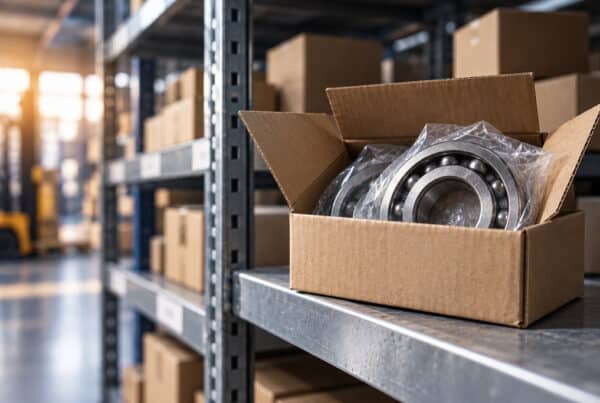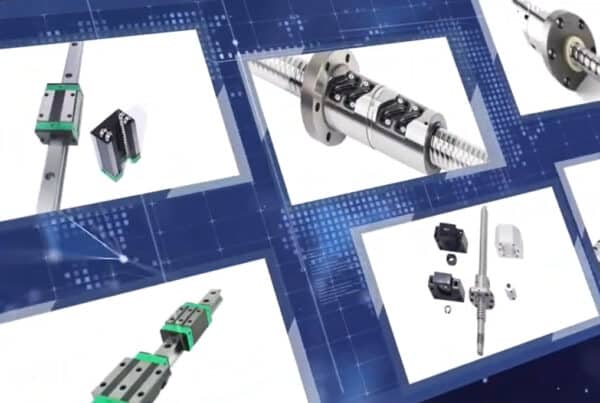
The total cost of ownership (TCO) of a bearing is the combined effect of purchase price, downtime, maintenance, and logistics. In industrial procurement, few items feel so familiar, yet are so often underestimated, as bearings.
Experienced buyers work with stable supplier networks, compare quotations routinely, and understand delivery terms and quality differences. This creates operational security.
But a strategic question still arises:
Is the total cost of ownership of your bearings truly optimized, or is the system simply running on habit?
This article is not about replacing existing suppliers. It is about identifying whether hidden cost-reduction potential still exists within the procurement structure—potential that can measurably reduce total cost and operational risk.
The decisive factor is not the price of the bearing
In real industrial environments, simple price comparison rarely leads to the best decision. A bearing’s unit price alone does not reflect its true total cost.
The real decision factors are:
- delivery reliability
- availability of critical sizes
- consistent quality
- warranty and technical support
- administrative and logistical simplicity
The real question is not “How much does a bearing cost?” but “What is its total cost of ownership in operation?”
In many production environments, hidden costs related to bearings can exceed the component price by orders of magnitude.
That is why the greatest savings often come not from price negotiation, but from reducing operational risk and overall cost impact.
Where does the real total cost of ownership appear?
Downtime and emergency procurement
The cost of an unexpected bearing failure extends far beyond the component itself.
Production loss, emergency logistics, overtime, and coordination efforts together often multiply total costs.
The greatest savings are frequently achieved by reducing downtime.
In a typical industrial setting, even a single hour of unplanned downtime can cost several times more than a complete bearing replacement.
If this happens only a few times per year, the hidden loss alone may exceed the value of an entire annual bearing budget.
In such situations, procurement focus immediately shifts to availability and speed. Unit price becomes secondary.
Unavailable stock and forced compromises
When a critical size is not available in time, organizations are forced into compromises:
- temporary, non-optimal solutions
- rapid testing of alternative brands
- unplanned mechanical modifications
All of these increase operational risk and total cost of ownership.
Managing multiple suppliers as an operational cost factor
Supplier diversification improves security, but also creates hidden administrative and logistical burden:
- more communication channels
- different commercial conditions
- parallel inventory handling
- more complex planning
Beyond a certain point, diversification stops being safety—and becomes a contributor to higher total cost.
When the supplier structure, not the price list, becomes expensive
In many industrial environments, the issue is not a single supplier, but the overall structure:
- fragmented portfolios
- inconsistent delivery times
- unstable availability
- unpredictable replenishment
Here, cost appears not in price lists, but in risk, uncertainty, and downtime.
At this point, procurement becomes not operational, but strategic.
When is it justified to introduce a new bearing supplier?
A stable, well-functioning system should not be changed unnecessarily.
However, clear signals indicate when a supplementary supplier can create real business value by lowering total cost of ownership.
If availability is unpredictable
Recurring shortages of critical sizes or long replenishment times quickly translate into operational risk and higher total cost.
If delivery time creates operational exposure
In maintenance environments requiring rapid response, faster availability alone can be a direct total-cost reduction factor.
If managing too many suppliers consumes resources
When supplier coordination requires disproportionate time and energy, rationalization can produce measurable operational savings and lower overall cost.
Next: which supplier model truly reduces total cost of ownership?
Optimizing total cost of ownership is not just about price negotiation.
It depends on how well a supplier supports continuous operation, rapid availability, and predictable quality.
In the next article, we examine which supplier model can genuinely reduce bearing TCO and what role a new strategic alternative may play. Read it >> New bearing supplier: when will it reduce the total cost of bearings?
If you have any questions, please feel free to contact us or read the FAQ section below!
In our Csapagy.hu webshop, you will find bearings from more than 50 manufacturers, available immediately from stock.
FAQ – Frequently asked questions about total cost of ownership
How high can downtime-related cost actually be?
This makes downtime reduction the most powerful TCO savings lever.